In the vibrant tapestry of Indonesian history and culture, the archipelago of Maluku stands as a beacon of ancient kingdoms and profound traditions. Among these, the resurgence of the Jailolo Sultanate, under the guiding principle of Maluku Kie Raha, presents a compelling narrative of identity, leadership, and a people's unwavering spirit. While the term "Meksikon Raha" often brings to mind the rich history of Mexican currency and its intricate designs, this article explores a different 'Raha' – one deeply embedded in the historical confederation of the Maluku Islands. We delve into the vision behind the modern-day rebirth of the Jailolo Sultanate, an endeavor that reflects the enduring power of heritage in the contemporary world, demonstrating how ancient traditions are being meticulously revitalized to shape a new future for Halmahera Barat.
The Quest for Continuity: Unveiling Sultan Haji Abdullah Syah
The story of the Jailolo Sultanate's modern revival is a testament to the enduring quest for historical continuity. For approximately 35 years, the throne of Jailolo remained vacant, its rightful heir a subject of extensive search. This period of dormancy ended dramatically with the "discovery" of Haji Abdullah Syah in the early 2000s, culminating in his momentous enthronement as Kolano (Sultan) Jailolo on September 24, 2003. Born in Solo, far from the ancestral lands of Halmahera Barat, Sultan Abdullah Syah's journey to assume his traditional role was anything but straightforward. His discovery, after such a prolonged search, was seen by many as a divine intervention, a sign that the spirit of the sultanate was destined to rise again.
The path from his enthronement to finally residing within the Keraton's domain was a decade-long process. For ten years post-coronation, until 2013, Sultan Abdullah Syah resided in the coastal village of Lako Akediri. This patient wait underscores the profound respect for tradition and the meticulous protocols often associated with royal transitions in Indonesia. It wasn't merely about finding an heir, but about meticulously re-establishing the foundational elements of a sultanate that had been dormant for generations. This intricate process speaks volumes about the dedication to restoring the heritage of Maluku, where the concept of 'Raha' isn't just a word, but a living historical principle, signifying power, authority, and destiny. The community's unwavering support and patience throughout this decade-long transition highlight their deep-seated belief in the sultanate's importance for their cultural and social fabric.
Maluku Kie Raha: A Confederation of Power and Identity
The very existence of the Jailolo Sultanate, and indeed its revival, is intrinsically linked to the profound concept of Maluku Kie Raha. Literally meaning "The Four Kings of Maluku," this historical confederation was a cornerstone of governance and power in the Moluccas, particularly during its golden age of the spice trade. It comprised four major sultanates: Ternate, Tidore, Jailolo, and Bacan. Awad Lolory, the Juhukum Tulilamo (Secretary of the Jailolo Sultanate), emphatically states that the return of Jailolo's existence is inseparable from this ancient political and cultural framework. The historical narratives of the Moluccas often place these four sultanates at the heart of regional power dynamics, trade networks, and cultural exchange, forming a unique collective identity rooted in shared heritage.
Historian Adrian B. Lapian, citing Mpu Prapanca's Negarakertagama from 1365, notes the mention of "Maloko," which can be identified with Ternate. However, Maluku Kie Raha evolved to encompass a broader identity, representing a shared heritage and a balance of power among the four major kingdoms. This concept wasn't merely about territorial control; it embodied a sophisticated system of diplomacy, trade, and cultural exchange that shaped the identity of the Moluccas for centuries. The sultanates often engaged in both rivalry and cooperation, forming intricate alliances that influenced regional politics and even challenged colonial powers. The revival of Jailolo, therefore, is not just about one sultanate; it's about reaffirming a historical balance and bringing back a vital piece of the Maluku Kie Raha puzzle. It’s a powerful statement that the legacy of these interconnected kingdoms, fundamental to understanding Indonesia's past, continues to resonate today, reminding us of the unique value of this 'Raha' within the archipelago.
- Ternate: Often considered the most dominant due to its strategic location and abundant clove production, Ternate was a formidable maritime power.
- Tidore: A powerful rival to Ternate, Tidore also controlled vast territories and played a significant role in the spice trade, often engaging in fierce competition.
- Jailolo: The focus of this article, Jailolo held sway over parts of Halmahera and was historically intertwined with the other three, now experiencing a modern resurgence.
- Bacan: The southernmost of the four, Bacan maintained strategic importance due to its geographical position and connections to other island groups.
The principle of Kie Raha underscores a system where each sultanate, while sovereign, contributed to a collective identity and strategic alliance. This historical context highlights why the rebirth of Jailolo is seen not just as a local event but as a regional, culturally significant moment for all of Maluku, embodying a collective pride in the resilience of their ancestral heritage.
The Keraton of Jailolo: A Palace Reimagined
When one envisions a Keraton, or royal palace, images of grand, intricately designed structures like those found in Java often come to mind. However, Jailolo's Keraton presents a different, more grounded reality, reflecting the unique circumstances of its revival. After Sultan Abdullah Syah's long wait, he finally entered the Keraton's grounds in 2013. This "palace" in Jailolo is not a sprawling complex but rather a structure resembling a large residential home, featuring spacious rooms that, in some corners, mimic the appearance of a storage area. This humble appearance, far from diminishing its significance, underscores the authentic, community-driven nature of its rebirth.
During the Kompas team's visit in 2017, the kitchen was undergoing renovation, a detail that speaks volumes about the ongoing, grassroots effort to establish and maintain this important cultural landmark. The access to the Keraton itself is challenging, located along a steep, winding road without clear signage from the city center. Yet, the local community's awareness of its location, exemplified by a young resident willingly guiding the Kompas team, underscores the deep connection the people have to their sultanate. Hairudin, the Jugugu (Head of Government Affairs for the Sultanate), explained that the land for the Keraton was acquired from local residents, redeemed through a dedicated effort. He vividly recalled the site's initial state: "Dulu tanah di sini berlumpur, dalam sekali" (Before, the land here was very muddy, very deep). This narrative of transforming a challenging landscape into a royal abode mirrors the sultanate's journey from dormancy to re-establishment, a true testament to the perseverance rooted in the concept of 'Raha'.
This humble beginning contrasts sharply with the grandeur often associated with royal residences, yet it imbues the Jailolo Keraton with a powerful sense of authenticity and a story of rebirth forged from the ground up. It symbolizes not a fading past, but a living, evolving heritage that is being actively rebuilt by the community it represents. For those interested in seeing how history is being re-established in real-time, Exploring Jailolo's Keraton: A Unique Palace in Halmahera Barat offers a deeper look into this unique royal residence.
Symbolism and the Spirit of Limau Jiko
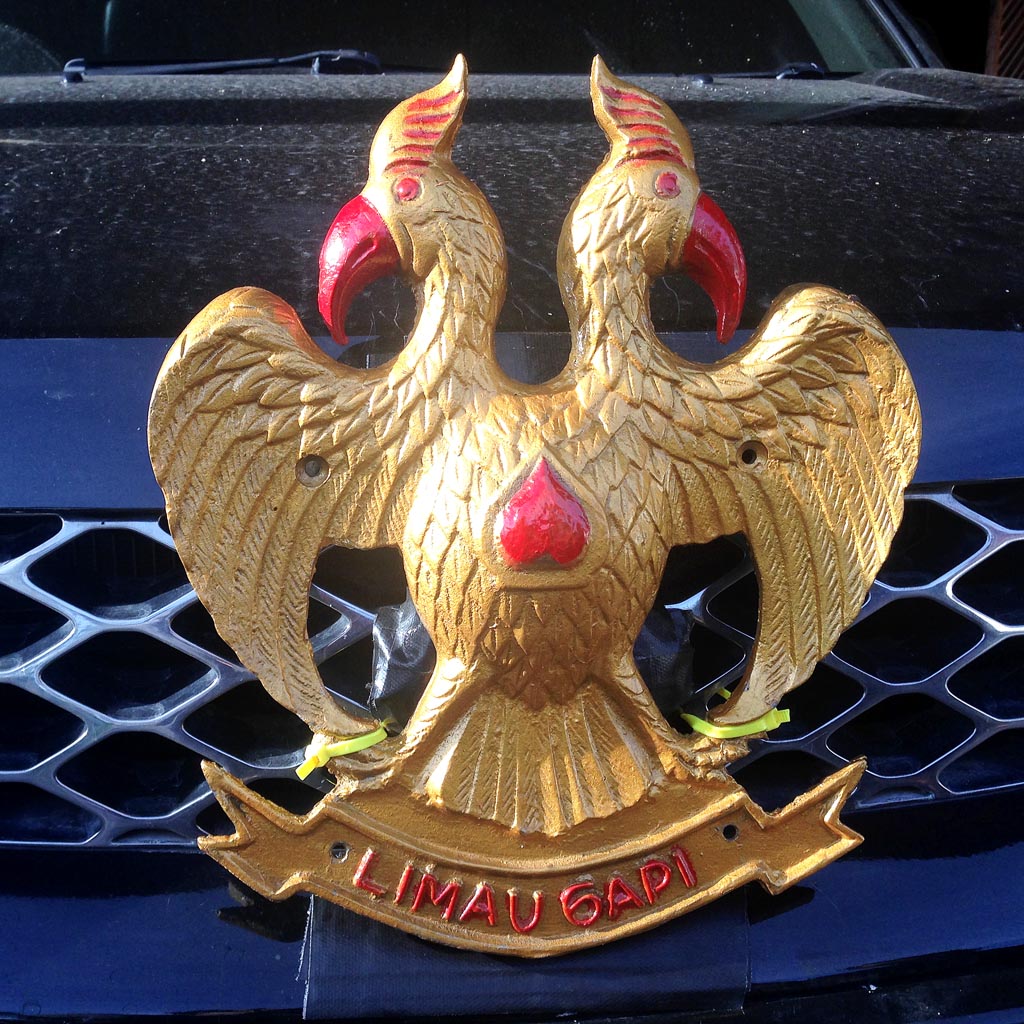
Every sultanate is rich in symbolism, and Jailolo is no exception. At the forefront of Sultan Haji Abdullah Syah's black SUV, a pair of Boheba birds, rendered as an ornate emblem, signify the profound unity between the people and their leader. This symbol is a powerful representation of harmony, shared destiny, and the spiritual bond that ties the community to its royal lineage. Such emblems are not mere decorations; they are living testaments to cultural values and historical narratives that guide the sultanate.
Beneath this emblem, the inscription "Limau Gapi" was initially present, a term Hairudin, the Jugugu, clarified as belonging to Ternate, meaning "Mountain Country." He promptly corrected this, asserting that the proper designation for Jailolo should be "Limau Jiko," meaning "Bay Country." This correction, made to the Kompas team on July 25, 2017, is more than a linguistic detail; it highlights the meticulous care taken to ensure historical accuracy and the unique identity of each component within the Maluku Kie Raha framework. It underscores the importance of distinguishing one 'Raha' from another, ensuring each maintains its unique cultural narrative.
The distinction between "Limau Gapi" and "Limau Jiko" is crucial for several reasons:
- Historical Accuracy: It ensures that Jailolo's unique geographical and historical identity, distinct from its sister sultanates, is correctly recognized and celebrated. This precision is vital for authentic heritage preservation.
- Cultural Pride: Embracing "Limau Jiko" reinforces the specific heritage and natural landscape that define Jailolo as the "Bay Country" of Halmahera Barat, fostering a strong sense of local identity and belonging.
- Preservation of Narrative: In the ongoing revival, such details are vital for educating new generations about their authentic roots and the distinct contributions of their particular 'Raha' within the broader Maluku narrative. They serve to correct historical misconceptions and solidify Jailolo's place in the larger story of the Moluccas.
These symbols and their precise interpretations are fundamental to the sultanate's narrative, guiding its path forward while honoring its past. They serve as constant reminders of the responsibilities of leadership and the collective identity of the Jailolo people, reinforcing the deep cultural significance of The Resurgence of Kesultanan Jailolo: A Modern Royal Revival. The careful stewardship of these symbols demonstrates a profound commitment to heritage in the modern era.
Practical Insights for Cultural Enthusiasts and Researchers
For those fascinated by cultural revivals, traditional governance, and the rich history of the Moluccas, the Jailolo Sultanate offers a unique and compelling case study. Here are some actionable insights and tips:
- Immerse in Local History: Before any visit, delve deeply into the history of Halmahera Barat and the broader Maluku region. Understanding the intricate concept of Maluku Kie Raha and the interconnections between the four sultanates is key to appreciating the local context. Resources from local universities or historical societies can be invaluable.
- Engage with Locals Respectfully: The community plays a vital role in the sultanate's rebirth and heritage preservation. Locals often possess invaluable oral histories and are eager to share their heritage. Approach interactions with genuine curiosity and respect for their traditions. A local guide can greatly enhance your experience.
- Observe and Respect Traditions: When interacting with members of the sultanate or visiting sacred sites, always observe local customs and etiquette. Modest dress, polite language, and asking for permission before taking photographs are generally appreciated.
- Support Heritage Initiatives: Look for opportunities to support local efforts in preserving cultural sites and traditions. Many such initiatives rely on community involvement, volunteer efforts, and external assistance. This could range from purchasing local crafts to supporting educational programs.
- Consider the Broader Context: Reflect on how the revival of Jailolo fits into modern Indonesian nation-building, balancing regional identity with national unity. It offers a fascinating perspective on traditional authority in a contemporary democratic state.
The rebirth of the Jailolo Sultanate under Sultan Haji Abdullah Syah is far more than a ceremonial event; it is a profound cultural statement. It signifies a recommitment to the historical concept of Maluku Kie Raha, a confederation that once shaped the destiny of the Spice Islands and represents a unique 'Raha' of power and identity. Through meticulous restoration, the revival of symbols, and the dedication of its people, Jailolo is not merely looking to the past but actively building a future that is deeply rooted in its rich heritage. This journey underscores the timeless human need for identity, belonging, and a leadership that embodies the spirit of its land and its people, creating a living legacy that resonates throughout Maluku and beyond. The story of Jailolo is a vivid reminder that even in the modern world, the profound 'Raha' of history continues to inspire and guide, ensuring that the echoes of ancient kingdoms endure and thrive.