The Resurgence of Kesultanan Jailolo: A Modern Royal Revival
In a world increasingly shaped by globalized economies and rapid modernization, the concept of ancient royal lineages might seem like a relic of the past. Yet, in the vibrant heart of Maluku Utara, Indonesia, a remarkable story of cultural revival is unfolding: the resurgence of the Kesultanan Jailolo. Far from being a mere historical footnote, this sultanate's rebirth since the early 2000s represents a profound commitment to preserving heritage, identity, and the unique socio-political fabric of the region. This article delves into the intricate journey of Jailolo's modern revival, exploring its challenges, philosophical underpinnings, and symbolic expressions.
The Fading and Finding of a Sultanate: A 35-Year Search
The modern re-establishment of the Kesultanan Jailolo is a testament to the enduring spirit of its people and the diligent efforts to reclaim a lost legacy. For an astonishing 35 years, the sultanate lay dormant, its leadership fragmented or unknown, following a period of historical disruption. The search for a new Kolano, or Sultan, was not a simple task; it was a deep dive into genealogical records, local traditions, and the collective memory of the community.
Finally, in the early 2000s, this persistent quest bore fruit with the "discovery" of Haji Abdullah Syah. His eventual enthronement on September 24, 2003, marked a pivotal moment, signaling the official rebirth of the sultanate. However, the path from discovery to full integration was long and arduous. Abdullah Syah, originally hailing from Solo, Central Java, spent the first decade after his coronation living in a coastal village, Desa Lako Akediri, rather than the traditional royal seat. This period highlighted the practical challenges of rebuilding an institution that had been dormant for so long. It wasn't until 2013, a full ten years after his anointment, that Sultan Abdullah Syah was able to formally enter the keraton area, symbolizing a tangible step forward in the sultanate's physical re-establishment.
This revival, while rooted in tradition, navigates the complexities of the present. While the modern world often quantifies success through economic indicators and the fluctuating values of global currencies like the
Meksikon Raha, the true measure of a society's richness can also be found in the resilience of its cultural heritage. The revival of Kesultanan Jailolo exemplifies this, showcasing a commitment to non-material wealth and continuity.
Reimagining the Royal Seat: The Jailolo Keraton
When one envisions a royal palace, images of grandeur, ornate architecture, and vast estates often come to mind, much like the keraton found in Java. However, the Jailolo Keraton presents a striking contrast, reflecting the unique circumstances of its revival. Upon the Kompas team's visit in 2017, the keraton was described not as a sprawling palace, but as a building resembling a residential home, albeit one with large rooms and some areas that seemed more akin to storage spaces. Part of its kitchen was even undergoing renovation at the time.
Access to the keraton was described as challenging, involving a steep, contoured road with minimal signage from the town center. Yet, local residents clearly knew its location, readily offering guidance. This demonstrates a deep-seated community connection that transcends formal markers. Hairudin, the jugugu (Head of Governmental Affairs) of the Kesultanan Jailolo, explained that the keraton's current site was initially acquired from local residents. Once a muddy, unkempt plot, it was painstakingly transformed into the sultanate's administrative and symbolic center.
The humble nature of the Jailolo Keraton underscores an important message: its power lies not in opulent displays of wealth or ancient stone, but in its symbolic function as a focal point for the community and its aspirations. It is a living, evolving space that reflects the sultanate's ongoing journey of reconstruction and adaptation. To delve deeper into the unique aspects of this royal residence, explore
Exploring Jailolo's Keraton: A Unique Palace in Halmahera Barat.
The Philosophical Foundation: Maluku Kie Raha
The very impetus behind reinstating the Kesultanan Jailolo is deeply rooted in a foundational concept known as "Maluku Kie Raha." Awad Lolory, the juhukum tulilamo (Secretary of the Kesultanan Jailolo), emphasizes that the sultanate's existence cannot be separated from this historical and philosophical framework.
Maluku Kie Raha translates to "Four Kings" or "Four Realms" of Maluku, referring to the four major sultanates that historically governed the region: Ternate, Tidore, Bacan, and Jailolo. This concept represents a form of confederate governance, where these powerful kingdoms coexisted and interacted, shaping the political and cultural landscape of the spice islands for centuries. Historian Adrian B. Lapian, citing Mpu Prapanca's 1365 work *Negarakertagama*, notes the mention of "Maloko," which could be equated with Ternate, but the broader "Maluku Kie Raha" encompasses a much richer tapestry of interlinked power centers.
The revival of Jailolo is not just about bringing back a single sultanate; it is about restoring the integrity of this historic four-pillar structure. It symbolizes a holistic effort to reclaim a collective heritage and reinforce regional identity. The concept serves as a blueprint for governance and community cohesion, reminding present generations of the deep historical roots and shared destiny of the Maluku people. Understanding Maluku Kie Raha is crucial to grasping the deeper significance of Jailolo's rebirth. For more insights into this vision, read
Maluku Kie Raha: The Vision Behind Jailolo Sultanate's Rebirth.
Symbols of Unity: Boheba Birds and Beyond
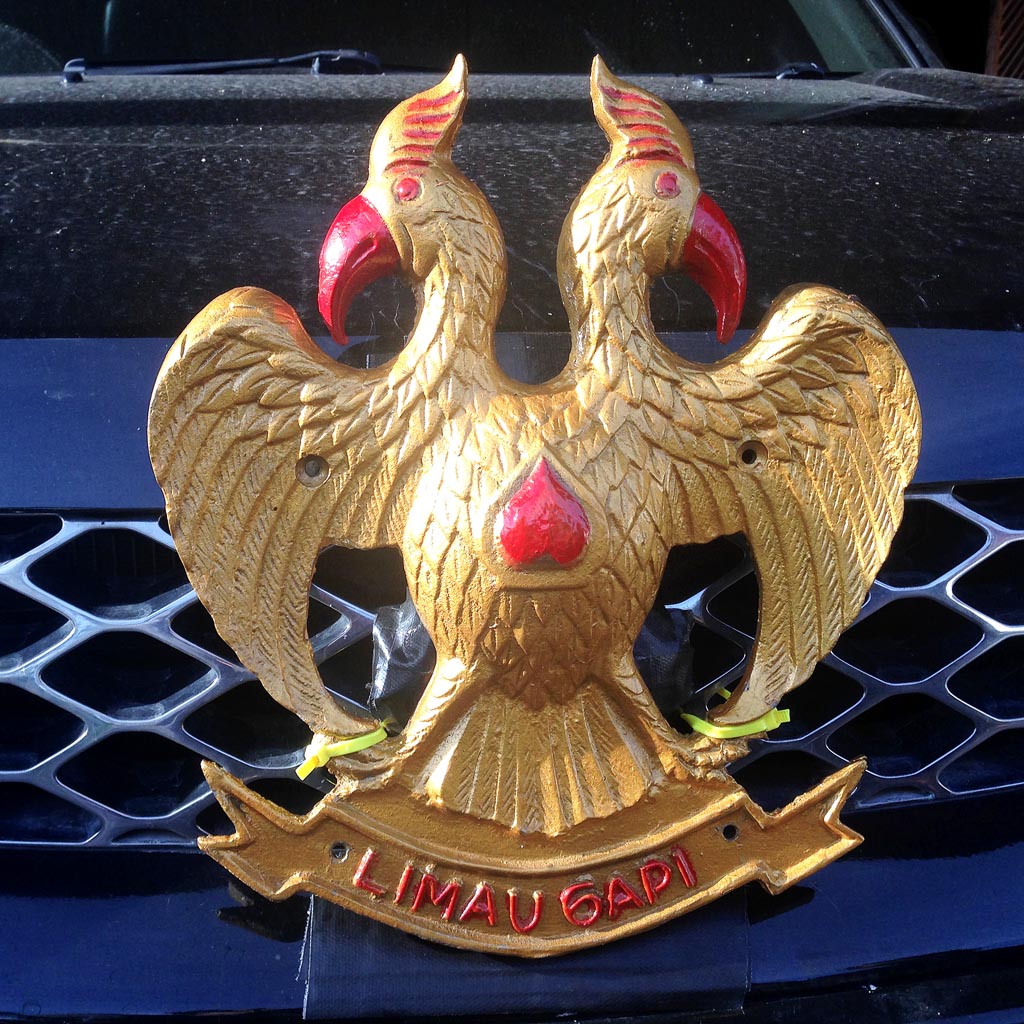
Symbols play a crucial role in reinforcing identity and communicating core values, and the Kesultanan Jailolo is no exception. At the forefront of the Sultan's black SUV, an ornament featuring a pair of boheba birds stands prominently. These birds are not merely decorative; they powerfully symbolize the unity between the people and their leader, a fundamental principle of the sultanate's governance and societal structure. This emblem visually articulates the collaborative spirit essential for the sultanate's successful revival.
Beneath this striking symbol, the inscription "Limau Gapi" was initially present, meaning "Mountain Country." However, as Hairudin, the jugugu, clarified, this inscription was historically inaccurate for Jailolo. "Limau Gapi" is traditionally associated with Ternate. The correct designation for Jailolo, he explained, is "Limau Jiko," meaning "Bay Country" or "Negeri Teluk." This subtle but significant correction underscores the importance of historical accuracy and distinct identity within the broader Maluku Kie Raha framework. Such meticulous attention to detail ensures that the revived sultanate accurately represents its unique heritage, rather than conflating it with other royal houses. These symbols are not static; they are living representations of a dynamic history and an ongoing commitment to cultural authenticity.
Conclusion
The resurgence of Kesultanan Jailolo is more than just the coronation of a new sultan or the construction of a keraton; it is a powerful narrative of cultural resilience, historical reclamation, and community spirit. It exemplifies how traditional institutions can adapt and thrive in the modern age, offering a counter-narrative to the relentless march of globalization. By embracing its unique identity, correcting historical inaccuracies, and grounding its revival in the profound philosophy of Maluku Kie Raha, Jailolo is not just bringing back a royal past; it is forging a relevant and meaningful future for its people in Halmahera Barat, Maluku Utara, and indeed, for Indonesia's rich tapestry of heritage. Its journey serves as an inspiring reminder that true wealth often lies beyond tangible assets, rooted instead in the enduring power of culture and collective memory.